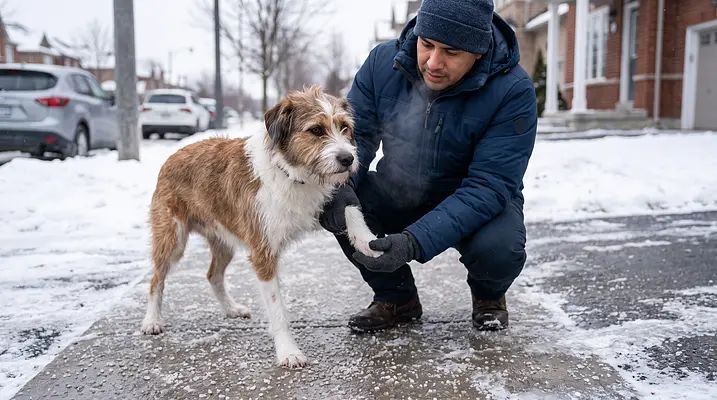
There is a specific heartbreak in watching a happy trot turn into a hesitant hobble. One minute, your dog is pulling you forward with their nose to the wind, and the next, they stop dead in their tracks. They lift a front paw high off the ground, tucking it close to their chest, and look up at you with confused, pleading eyes. That salty, slushy sidewalk might just look like wet pavement to us, but to your dog, it can feel like walking on needles. It’s the perfect reminder that while winter brings beautiful snowy landscapes, it also demands a shift in how we care for our canine companions.
Winter walks require a little more foresight than a simple grab-and-go. The drop in temperature, the chemical hazards hidden in the snow, and the early sunsets all pose unique risks. But with a few adjustments to your routine, you and your pup can still enjoy the season safely and comfortably. Here is how to navigate the colder months with confidence.
🌡️ Understanding Cold Tolerance
Just like humans, dogs have varying tolerances for the cold based on their size, coat type, and age. A thick-coated Husky might beg to stay out all day, while a short-haired Chihuahua or an elderly Greyhound might start shivering the moment the thermometer dips below 45°F (7°C). It is vital to judge your individual dog’s comfort level rather than relying on a generic rule of thumb.
- Monitor your dog closely for signs of discomfort, such as lifting paws, shivering, whining, or slowing down.
- Invest in a well-fitting sweater or coat for short-haired, elderly, or small breeds to provide necessary insulation.
- Shorten your walks significantly on especially frigid days to prevent hypothermia or frostbite.
- Check the weather forecast for wind chill, as this can cut through a fur coat much faster than temperature alone suggests.
- Keep your dog moving during walks to generate body heat, but allow for sniffing breaks in sheltered areas.
🐾 Protecting Paws from Salt and Ice
That paw lift we mentioned earlier is often a reaction to ice balls forming between toes or the stinging sensation of road salt. Chemical ice melters are corrosive and can cause chemical burns on delicate paw pads, and they are toxic if your dog licks them off later. Creating a barrier between those paws and the ground is one of the most important winter safety steps you can take.
- Apply a thin layer of paw balm or petroleum jelly to your dog’s pads before heading out to create a protective seal. 🧴
- Consider fitting your dog with waterproof booties for the ultimate protection against salt and sharp ice.
- Wipe or wash your dog’s paws with a warm, damp cloth immediately after every walk to remove salt and debris.
- Trim the fur between your dog’s toes to reduce the chance of painful ice balls forming and clinging to the hair.
- Inspect paw pads daily for cracks, redness, or irritation caused by the cold, dry air.
⚠️ The Hidden Danger of Antifreeze
While we worry about the cold air, the ground holds a different threat that is odorless to humans but sweet-tasting to dogs: antifreeze. Even a small amount of ethylene glycol—the main ingredient in many antifreeze brands—can be fatal if ingested. Because it has a sweet taste, dogs are often tempted to lick puddles in driveways or garages, making vigilance critical during the winter months.
- Clean up any spills in your driveway or garage immediately and thoroughly, using kitty litter or sand to absorb the liquid. 🧹
- Check your vehicle regularly for radiator leaks to prevent puddles from forming in the first place.
- Walk your dog on a leash near roads and parking lots to prevent them from drinking out of puddles or gutters.
- Switch to propylene glycol-based antifreeze, which is a safer, less toxic alternative, though it still requires caution.
- Call your veterinarian or an emergency animal hospital instantly if you suspect your dog has ingested even a tiny amount of antifreeze.
🚶 Navigating Shorter Daylight Hours
Winter often means leaving for work in the dark and coming home in the dark. Walking during low-light conditions reduces visibility for drivers and can make familiar routes feel disorienting or hazardous. Ensuring you and your dog are visible and prepared is the best way to maintain your exercise routine safely during the shorter days.
- Attach a reflective vest, collar light, or LED collar to your dog to ensure they are visible to passing cars. 🔦
- Wear bright, reflective clothing yourself so that drivers can spot you from a distance.
- Stick to familiar, well-lit routes to avoid hidden ice patches or obstacles that are hard to see in the dark.
- Carry a small flashlight or use your phone light to illuminate the path ahead and check the ground for hazards.
- Keep your dog on a shorter leash to maintain better control if they are startled by a shadow or noise in the dark.
Winter doesn't have to be a season of worry. By paying attention to the ground beneath their paws and the temperature in the air, you can protect your best friend from the season’s hidden hazards. It’s about making small adjustments—grabbing that sweater, wiping those paws, and clipping on a light—that make all the difference. With these precautions in mind, you can turn those winter walks from a potential hazard into a safe, enjoyable adventure for you both.
Quick Action Plan
- Purchase a paw balm or protective wax to apply before walks today.
- Check your garage floor for any fluid leaks or spills immediately.
- Add a reflective light or band to your dog’s collar for evening walks.
- Place a towel by the door to wipe paws as soon as you return inside.
- Shorten your next walk if the temperature drops below freezing.
Disclaimer: This blog post provides general information and is not a substitute for professional veterinary advice. If you have concerns about your dog’s health or suspect they have ingested a toxic substance, please contact your veterinarian immediately.
If you find it challenging to keep track of all these winter safety routines—or just want to stay on top of your pet’s general care—consider using the Doggy Time app. It helps users collaborate on logging pet activities, training milestones, and health items, ensuring nothing falls through the cracks. With smart alarms and scheduling features, Doggy Time makes it easy to manage care for dogs, cats, and over 30 other species, keeping your whole family happy and healthy.