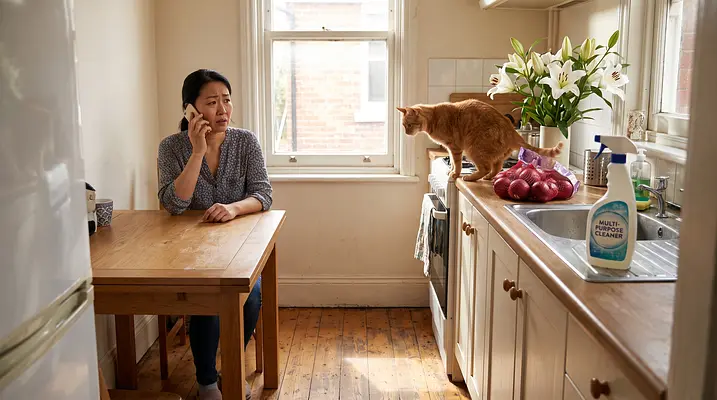
The bouquet of stargazer lilies on the kitchen counter looks innocent enough, smelling sweet and brightening up the room for spring. But for a curious cat who decides to nibble on a single leaf or lick pollen off their paws, that floral arrangement is a one-way ticket to the emergency veterinary hospital. It is a heartbreaking scenario that plays out every single year, turning a moment of home decoration into a medical crisis that can easily be avoided with a little knowledge.
Our feline friends are masters of exploration, squeezing into tight spots and batting at anything that dangles or smells interesting. Because they groom themselves so meticulously, even topical exposures to toxins can turn dangerous when they clean their fur. Let’s walk through your home together to identify the hidden hazards so you can relax, knowing your whiskered companion is safe from harm.
🌿 The Most Dangerous Plants for Felines
Many common houseplants and floral arrangements contain toxins that can cause kidney failure, heart issues, or severe gastrointestinal distress in cats. While some plants cause mild irritation, others are lethal in tiny doses, making identification crucial for every pet owner.
- Avoid all varieties of Lilies (Lilium and Hemerocallis species) if you share your home with a cat, as ingesting even the pollen or water from the vase can cause fatal kidney failure.
- Keep Sago Palms out of reach or out of your home entirely, as every part of this plant is highly toxic and can cause liver failure.
- Research flowers before buying bouquets, steering clear of Tulips, Azaleas, and Oleander, which can cause intense vomiting, heart issues, and even death.
- Check the ASPCA toxic plant database before bringing any new greenery home to ensure it is safe for your curious companion.
- Replace toxic plants with cat-safe alternatives like Spider Plants, Boston Ferns, or Cat Grass to satisfy their urge to nibble on greenery safely.
🍫 Toxic Foods in the Kitchen
Cats are often interested in what we are eating, but their metabolism works differently than ours, turning some human treats into deadly poisons. It takes very little of certain ingredients to make a cat severely ill, so vigilance in the kitchen is essential.
- Store chocolate in high cabinets or sealed containers, as theobromine and caffeine can cause heart problems, seizures, and death even in small amounts.
- Never feed your cat onions, garlic, chives, or leeks, whether raw, cooked, or powdered, since they destroy red blood cells and cause anemia.
- Keep grapes and raisins off the counter, as these snacks can cause sudden kidney failure in cats, though the exact toxic mechanism remains unknown.
- Avoid sharing alcohol or caffeine, as even a few laps of coffee, tea, or alcoholic beverages can be life-threatening due to their small body size.
- Check ingredient labels for Xylitol, an artificial sweetener found in sugar-free gum and baked goods that causes a rapid drop in blood sugar and liver failure.
🧪 Household Products and Medications
Cleaning supplies and human medications are responsible for a vast number of accidental pet poisonings every year. Cats can be exposed by walking through a freshly cleaned floor or knocking a pill bottle off a counter.
- Keep all human medications in locked cabinets, as common painkillers like acetaminophen (Tylenol) are fatal to cats and should never be given to them.
- Store cleaning products high up or behind child-proof latches, preventing access to bleach, detergents, and disinfectants that can burn their mouths and paws.
- Close toilet lids tightly to prevent your cat from drinking treated water, especially if you use automatic bowl cleaners or bleach tablets.
- Wipe up spills immediately to ensure your cat does not walk through chemicals and later ingest them while grooming.
- Apply essential oils with extreme caution, as tea tree, peppermint, and citrus oils can be toxic if inhaled, ingested, or applied to the skin.
🏠 Room-by-Room Safety Checklist
Every room presents unique opportunities for mischief, and a quick safety scan can prevent a tragedy. Walk through your home with the eyes of a cat to spot these specific dangers.
- Secure trash cans with locking lids to prevent access to food scraps, coffee grounds, and dental floss that can cause intestinal blockages.
- Check for loose coins, batteries, or small toys on the floor that a cat might swallow, leading to choking or heavy metal poisoning.
- Store yarn, thread, and ribbons in drawers, as linear foreign bodies can "saw" through the intestines and require emergency surgery.
- Keep laundry detergent pods out of reach, as cats are often tempted to bat at them, which can result in bites that release highly concentrated toxins.
🛁 Bathroom Dangers
- Close medication bottles tightly and never leave pills on the counter, even if you plan to take them again in a few hours.
- Keep the toilet seat down to stop your cat from drinking potentially chemical-laden water or falling in.
- Store hair ties and rubber bands in a drawer, as these are common items that cats love to swallow but can cause severe internal damage.
🛋️ Living Room Risks
- Inspect houseplants for chew marks regularly to ensure your cat hasn't been snacking on something dangerous.
- Cover electrical cords with protective tubing to prevent chewing, which can result in severe burns or electrocution.
- Check under furniture and rugs for dropped pills, grapes, or small items that may have rolled out of sight.
🚨 What to Do After Exposure
If you suspect your cat has ingested something toxic, time is of the essence and panic is your enemy. Acting quickly and methodically gives your feline friend the best chance of a full recovery.
- Remove your cat from the area immediately to prevent them from ingesting more of the toxin.
- Identify the substance if possible by looking for chew marks, spilled containers, or packaging that you can take to the vet.
- Call your veterinarian or an emergency animal clinic right away for specific instructions, as inducing vomiting at home can sometimes cause more harm than good.
- Do not give home remedies like milk, salt, or hydrogen peroxide unless specifically directed by a veterinary professional.
- Gather a sample of the substance or take a photo of the plant or packaging to help the vet identify the toxin quickly.
- Monitor your cat’s breathing and behavior carefully on the way to the clinic, keeping them warm and calm in a secure carrier.
Knowing what to look for is half the battle, but keeping track of your cat's daily habits can help you spot when something is wrong before it becomes an emergency. By staying vigilant and removing these common hazards, you create a sanctuary where your cat can explore, play, and nap without risk.
📝 Quick Action Plan
- Walk through every room today to identify and remove toxic plants.
- Move all medications and cleaning supplies to high shelves or locked cabinets.
- Check your handbag and counters for loose items like gum, coins, or batteries.
- Save your vet’s number and the ASPCA Poison Control number in your phone.
- Download the Doggy Time app to log symptoms and set reminders for vet visits.
Disclaimer: This blog post is for informational purposes only and does not constitute professional veterinary advice. If you suspect your pet has been poisoned or is in distress, please contact your veterinarian or an emergency animal hospital immediately.
To make pet safety even easier, consider using the Doggy Time app. While the name says "dog," it is designed for all pets, including cats, rabbits, and birds. It helps you collaborate with family members to log activities, track health symptoms, and set smart alarms for medication or feeding times, ensuring nothing slips through the cracks when it comes to your furry friend's care.