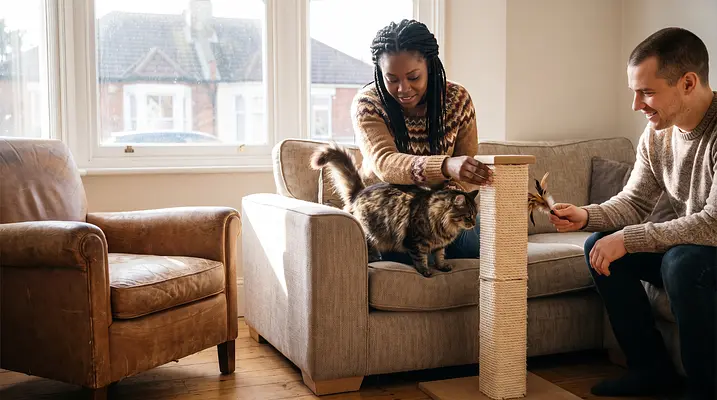
There is a specific kind of heartbreak that comes with walking into the living room to find your beloved sofa looking like it went through a paper shredder. You might see the shredded fabric and feel a flash of frustration, wondering why your cat seems determined to destroy your home, but that torn upholstery is actually a sign of a healthy, natural feline instinct. Scratching is not a behavioral flaw or an act of rebellion; it is a biological necessity that serves vital functions for your cat’s physical and mental well-being. Instead of trying to stop the behavior entirely, the goal is to understand the drive behind it and redirect that energy toward appropriate outlets, saving your furniture while keeping your cat happy.
🐾 Understanding the Instinct
Cats do not scratch your furniture to spite you or because they have bad manners; they do it because they are biologically wired to maintain their claws and mark their territory. Understanding the "why" behind the behavior is the first step toward finding a solution that works for both of you. When you realize that your cat is engaging in a natural grooming and communication ritual, it becomes much easier to address the situation with patience rather than punishment.
- Remove the old nail sheaths to keep claws sharp and healthy for climbing and self-defense.
- Stretch the muscles in their back and shoulders to maintain physical agility.
- Deposit visual scratch marks and scent signals from their paw pads to claim territory. 🏠
- Express excitement or relieve stress, particularly when they see you come home or spot a bird outside.
🛋️ Why the Furniture Is a Target
Your cat likely bypassed the expensive scratching post you bought in favor of the sofa because the furniture offers the perfect combination of texture, stability, and location. To a cat, a wobbly post hidden in a dark corner cannot compete with the sturdy, textured surface of a sofa armrest right in the center of the action. Once you identify what makes the furniture appealing, you can replicate those features in a more appropriate alternative.
- Evaluate the stability of your current scratching options, as cats hate posts that wobble under their weight.
- Consider the texture preferences, noting that many cats prefer the rough resistance of sisal or carpet over smooth wood.
- Observe the location of the scratching, as cats often mark high-traffic social areas. 🚦
- Check for vertical versus horizontal preferences, since some cats prefer to scratch on flat surfaces like rugs or mats.
🪵 Choosing the Right Scratching Post
The pet store aisle is full of scratching options, but not all posts are created equal, and buying the wrong one is often the main reason cats ignore them. To successfully redirect the habit, you need to provide an alternative that is actually more appealing than your sofa. A good scratching post is an investment in your home and your cat's health, so look for these specific features before you buy.
- Choose a post that is tall enough for your cat to fully stretch their body while scratching. 📏
- Select a heavy, wide base that ensures the post will not tip over during vigorous use.
- Opt for sisal fabric or rough rope, which provides the necessary resistance for shedding nail sheaths.
- Provide variety by offering both vertical posts and horizontal cardboard scratchers to test preferences.
📍 Strategic Placement Matters
Even the best scratching post will go unused if you tuck it away in a spare bedroom or a dark corner of the basement. Cats are territorial animals, and they want to mark the areas where they spend the most time and where the family gathers. You have to place the new scratching tool directly in the path of your cat's current "crime spree" to make the switch successful.
- Place the post directly in front of the furniture your cat currently targets. 🛋️
- Move the post to a prominent social area, such as near a window or in the living room center.
- Position a scratching option near your cat's favorite sleeping spot for a good stretch upon waking. 😴
- Gradually move the post a few inches per day toward a more convenient location once the habit is established.
🎾 Redirecting the Habit
Now that you have the right tools in the right places, you need to teach your cat that the new post is the superior option. This process involves making the furniture unappealing while making the scratching post an irresistible source of reward and fun. Consistency is key here, and positive reinforcement will work much faster than yelling or spraying water, which often only causes fear rather than learning.
- Cover the furniture arms with double-sided sticky tape or aluminum foil to deter the cat. 🛑
- Sprinkle high-quality catnip or silvervine at the base of the new post to attract your cat to it.
- Use a wand toy to drag the lure up the side of the post, encouraging the cat to dig their claws in.
- Reward your cat immediately with a treat or praise the moment they scratch the post. 🍣
- Trim your cat's claws regularly to minimize the damage done during the learning process.
🩺 Health Disclaimer
While scratching is a normal behavior, a sudden increase in destructive scratching or changes in gait could indicate an underlying medical issue. If your cat seems obsessed with scratching one specific paw, is limping, or has swollen nail beds, please consult your veterinarian. Persistent destructive behavior linked to anxiety may also require the guidance of a certified feline behaviorist.
📝 Quick Action Plan
- Measure your cat's full standing height to ensure the new post is tall enough.
- Place a sturdy scratching post directly in front of the damaged furniture area today. 🛋️
- Apply double-sided sticky tape to the sofa arms to make the surface unpleasant.
- Sprinkle fresh catnip on the new post to lure your cat toward it. 🌿
- Reward your cat with a high-value treat every time they use the post correctly.
- Schedule a weekly claw trimming session to keep nails blunt and dull. ✂️
Conclusion
Living with a cat does not have to mean sacrificing your furniture to the shredding gods. By acknowledging that scratching is a natural, essential part of your cat’s life, you can shift your strategy from punishment to redirection. With the right equipment, a little strategic placement, and a lot of patience, you can satisfy your cat’s instincts and keep your sofa intact for years to come.
If you are looking for a way to stay on top of your pet’s daily routines, consider using the Doggy Time app. It helps you collaborate with family members on logging pet activities, training sessions, and health items, complete with smart alarms and scheduling to ensure nothing falls through the cracks.