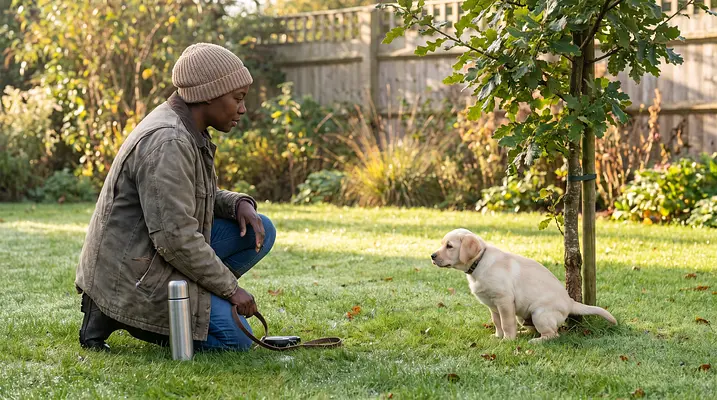
Day 3 with the new puppy. The notebook on the kitchen counter is already half-filled with frantic scribbles: "7:00 AM - Puddle by the back door," "7:15 AM - Success outside!," "8:30 AM - Accident on the rug," "9:00 AM - Just a few drops?". As the ink bleeds through the paper, you stare at the chaotic log and wonder if your house is slowly turning into a indoor swimming pool or if this relentless schedule is actually normal. It feels like you are opening the back door every twenty minutes, but when you look at the timestamps, a pattern starts to emerge from the mess.
Rest assured, what you are experiencing is the reality of raising a baby animal. Puppies have tiny bladders and even smaller impulse control, meaning that for the first few months, your life revolves entirely around the next bathroom break. Understanding the biological limits of your puppy’s age is the key to keeping your sanity and your carpets clean.
📅 The Age-in-Months Rule
If you are looking for a quick and easy way to estimate how long your puppy can comfortably hold their bladder between bathroom breaks, veterinarians and trainers often point to a simple formula. This guideline suggests that a puppy can "hold it" for one hour for every month of age, plus one. While this is a helpful benchmark, remember that this rule applies to a resting puppy—active play and excitement will shorten this window significantly.
- Calculate your puppy’s age in months to determine their maximum hold time during the day.
- Avoid testing the maximum limit during waking hours to prevent unnecessary accidents.
- Use this rule primarily for calculating how long they can wait in a crate or at night while sleeping.
🐶 Pee Frequency by Age: 8 Weeks to 1 Year
As your puppy grows from a wobbly infant into a confident adolescent, their bladder capacity expands rapidly, changing your daily routine week by week. Here is what you can generally expect regarding frequency and control as they mature.
8 to 12 Weeks (2-3 Months) At this young age, puppies have very little control and need to go out immediately after waking, eating, or playing. Expect to take them out every 1-2 hours during the day, and even once or twice during the night.
- Take your puppy outside every 60 minutes during waking hours to stay ahead of accidents.
- Schedule a bathroom break 15 to 20 minutes after every meal to catch the inevitable urge.
- Plan for at least one middle-of-the-night potty break until they reach 12 weeks of age.
3 to 6 Months This is the golden window for potty training where most puppies begin to gain significant bladder control and can "hold it" for longer stretches. You can generally stretch the intervals to every 3-4 hours, though you still need to watch for cues during high-energy play.
- Transition to a schedule of every 3 to 4 hours during the day.
- Maintain a strict "first thing in the morning" and "last thing at night" routine.
- Reduce the mid-night bathroom breaks to zero as physical maturity increases.
6 to 12 Months By half a year, most puppies can hold their bladder for about 4 to 6 hours, though you shouldn't force them to wait that long if you are home. As they approach their first birthday, they are nearing adult capacity and should be able to sleep through the night and wait a standard workday (with a mid-day walker if necessary).
- Aim for a bathroom break every 4 to 6 hours during the day.
- Trust your puppy’s signals more than the clock as they learn to communicate their needs.
- Maintain a consistent schedule to reinforce good habits even if accidents are rare.
🗓️ Sample Daily Pee Schedules
Seeing the numbers on paper is one thing, but living through the day is another. Here are two sample schedules to help you visualize what a typical routine looks like for different age groups.
Sample Schedule: 10-Week-Old Puppy This schedule is intensive and requires a caregiver who is home most of the day.
- 7:00 AM: Immediate trip outside upon waking up (carry them to avoid accidents).
- 7:30 AM: Food and water bowl down for 15 minutes.
- 7:45 AM: Second trip outside (post-meal urge).
- 9:00 AM: Mid-morning bathroom break and short play session.
- 11:00 AM: Pre-lunch bathroom break.
- 11:30 AM: Lunch and water.
- 11:45 AM: Post-lunch bathroom break.
- 1:00 PM: Afternoon bathroom break.
- 3:00 PM: Mid-afternoon bathroom break.
- 5:00 PM: Dinner time.
- 5:15 PM: Post-dinner bathroom break.
- 7:00 PM: Evening bathroom break.
- 9:00 PM: Last call before bed.
- 2:00 AM: Middle-of-the-night quick trip outside.
Sample Schedule: 6-Month-Old Puppy This schedule is more manageable and fits around a typical work-from-home day.
- 7:00 AM: Morning wake-up and bathroom break.
- 7:30 AM: Breakfast.
- 8:00 AM: Quick bathroom break before you start your day.
- 12:00 PM: Lunchtime walk and bathroom break.
- 5:00 PM: Post-work walk and bathroom break.
- 6:00 PM: Dinner.
- 6:30 PM: Post-dinner bathroom break.
- 10:00 PM: Final bedtime bathroom break.
🚨 Signs the Frequency is Abnormal
While most accidents are simply a result of a young bladder or a missed schedule, drastic changes in frequency or volume can signal a health issue. It is vital to know the difference between a training regression and a medical problem that requires a vet visit.
- Watch for frequent squatting with little to no urine produced, which can indicate a urinary tract infection.
- Monitor for excessive water drinking combined with excessive urination, a potential sign of diabetes or kidney issues.
- Look for blood in the urine or dark, discolored spots on the floor.
- Notice if your house-trained dog suddenly starts having accidents inside without a behavioral trigger.
If you observe any of these symptoms, do not wait to see if it resolves on its own. Contact your veterinarian immediately to rule out infection or illness.
🏁 Quick Action Plan
You can establish a reliable routine today without overhauling your entire life. Start with these simple steps to get your puppy’s potty training on track.
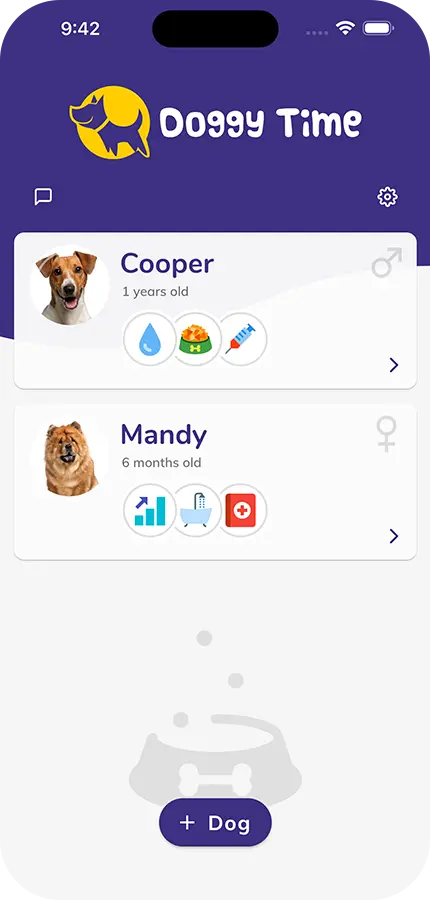
- Download a tracking app or grab a notebook to log every pee and accident for three days.
- Set a recurring timer on your phone based on your puppy’s age-in-months rule.
- Take your puppy to the exact same spot outside every single time to build a scent association.
- Reward successful outdoor pees immediately with a high-value treat and praise.
- Clean all indoor accidents with an enzymatic cleaner to remove pheromone trails.
Building a routine is the hardest part of puppy parenthood, but it pays off in a trustworthy, happy companion. If you find yourself struggling to keep track of who did what and when, consider using the Doggy Time app. It helps you collaborate with family members on logging pet activities, training milestones, and health items, complete with smart alarms and scheduling features to ensure your new furry friend stays on track.
Disclaimer: This blog post provides general information and should not replace professional veterinary advice. If you are concerned about your puppy’s health or bathroom habits, please consult your veterinarian.