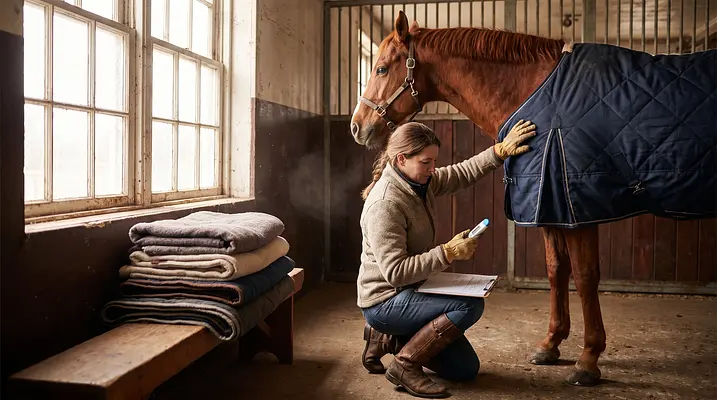
I once watched a boarder rush out to the pasture in early October, bundled up in a thick down jacket because there was a "chill" in the air, only to drape a heavy turnout rug over her horse while the rest of the herd stood contentedly in the autumn breeze. It is a classic scenario: we see a thermometer dipping or feel a bite in the wind, and we immediately project our own need for a cozy sweater onto our equine partners. While the intention is always rooted in love and care, horses have a much different relationship with temperature than we do, and blanketing at the wrong time can actually cause more harm than good. Let’s look at how to make the best choice for your horse’s unique needs.
🌡️ Assessing the True Need
Determining whether your horse actually requires a blanket is the first step in responsible care, as over-blanketing is a common mistake that can lead to sweat buildup and discomfort. You must evaluate the specific factors of your horse's lifestyle rather than relying solely on the air temperature you feel yourself.
- Consider your horse’s natural coat thickness, as a thick winter coat provides substantial warmth on its own.
- Evaluate the living situation, noting that horses in heated barns need different protection than those living out 24/7.
- Assess the age and health status of the animal, since senior horses or those with metabolic issues often struggle to regulate body heat.
- Determine if the horse has been body-clipped, which removes their natural protection and almost always necessitates artificial coverage.
- Check for shivering, which is the clearest physical sign that the horse has exceeded its ability to thermoregulate.
⚖️ Choosing the Right Weight
Once you have established that a blanket is necessary, selecting the correct weight is vital to ensure protection from the elements without causing the horse to overheat. The weight of the fill should correspond directly to the severity of the weather and the thickness of the horse's coat.
- Select a lightweight sheet or 0g fill for rain protection during mild temperatures above 50°F (10°C).
- Choose a medium weight blanket (150g–250g fill) for horses with moderate coats in temperatures ranging from 30°F to 50°F (-1°C to 10°C).
- Reserve heavy weight rugs (300g–400g+ fill) for clipped horses or extreme conditions dropping below freezing 🥶.
- Layer waterproof outer shells over stable blankets to provide flexibility for changing weather patterns.
- Match the blanket's insulation to the lowest temperature of the night, not the warmest temperature of the day.
📏 Ensuring a Proper Fit
A blanket that fits poorly can cause painful rubs, restrict movement, and even become a safety hazard in the field. Taking accurate measurements before you buy is the best way to ensure your horse remains comfortable and safe while turned out.
- Measure from the center of the horse's chest to the edge of the tail to determine the correct size in inches.
- Check that the surcingles allow a hand's width of space to prevent rubbing against the elbows or girth area.
- Adjust the leg straps so they cross neatly between the hind legs without dangling loosely or pulling tight.
- Verify the neck opening sits at the base of the mane without pressing against the withers or sliding back.
- Run your hand along the shoulders and withers to feel for tight seams that might cause hair loss or sores.
🥵 Avoiding Overheating
Overheating is a serious risk that can lead to dehydration, skin issues, and general lethargy, yet it is often overlooked by well-meaning owners. Monitoring your horse under the blanket is just as important as putting it on in the first place.
- Slip a hand under the blanket at the horse's shoulder or girth area to feel for dampness or sweat.
- Check the horse's ears, as cold ears can indicate a horse is too cold, while hot ears may signal overheating.
- Observe the horse's behavior for signs of lethargy or unwillingness to move, which can signal thermal stress.
- Remove the blanket immediately if you detect moisture, as a wet horse under a rug chills faster than a dry one.
- Adjust your blanketing schedule during unexpected warm spells or dramatic temperature swings during the day.
📝 Quick Action Plan
- Check the forecast tonight and compare the predicted low against your horse's current coat thickness.
- Perform a physical fit check on your current blankets to look for worn lining or tight straps.
- Feel behind your horse's elbow today to check for hidden sweat patches.
- Create a temperature chart to tape inside your tack trunk for quick blanketing decisions.
- Inspect all fasteners and surcingles for wear and tear before the next use.
Caring for a horse is a constant balancing act, and blanketing is perhaps one of the most debated topics in the barn. By focusing on the horse's physiological needs rather than our own comfort, we can ensure they stay healthy, happy, and ready to ride all season long. Trust your observations, check for fit and sweat often, and remember that sometimes, the best blanket is the one nature grew for them.
Disclaimer: This blog post is for informational purposes only and does not constitute veterinary advice. Always consult with a qualified equine veterinarian regarding your horse’s specific health and care needs.
If you are looking for a better way to organize your stable management, consider using the "Doggy Time" app. While it is great for dogs, it helps users collaborate on logging pet activities, training, and care schedules for over 30 different species. You can set smart alarms for blanketing changes, track health logs, and ensure everyone in the barn is on the same page.