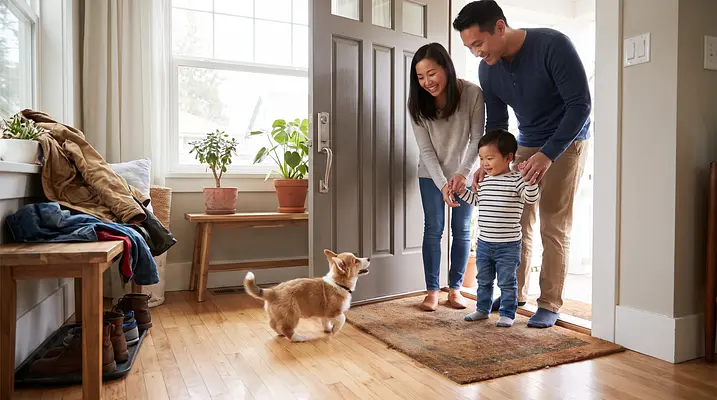
The doorbell rings, and chaos ensues. Your friends are standing on the porch, bags of chips in hand, when your usually angelic four-month-old Golden Retriever barrels toward the entryway. You manage to grab his collar just in time, but as he wiggles, tail wagging so hard his whole body shakes, a tell-tale stream of warm liquid hits your welcome mat. Your guests smile awkwardly, you mutter an apology, and suddenly the happy greeting feels a little damp and stressful. It’s a scene played out in hallways across the country, leaving owners wondering if their pup has a bladder of steel or a behavioral problem.
While these "greeting dribbles" can be frustrating, they are incredibly common. Understanding why they happen is the first step toward dry floors and happier hellos.
🧐 Why the Dribbles Happen
Puppies lack the muscular control of adult dogs, and their emotional thresholds are much lower. When the emotional dial turns up to eleven—whether from joy or fear—the bladder often takes the wheel before the brain can intervene.
- View the bladder as a muscle that is still developing in puppies, making physical control difficult during high-stimulation moments.
- Understand that puppies view high-energy greetings as overwhelming, causing a momentary loss of bodily control.
- Recognize that the brain-to-bladder communication highway is still under construction in dogs under six months old.
🥊 Excitement Peeing vs. Submissive Peeing
Though they look similar on your rug, excitement peeing and submissive peeing stem from opposite emotional states. Telling them apart helps you tailor your approach to exactly what your puppy is feeling.
- Observe the body language of an excitement peer: they hold their ears up, wag their tail high, and maintain a bouncy, happy posture.
- Look for signs of submissive peeing, such as cowering, tucking the tail between the legs, flattening the ears back, or rolling over to expose the belly.
- Notice that excitement peeing happens during active play or greeting, while submissive peeing often occurs when the puppy is being scolded or loomed over.
- Identify the trigger: excitement peeing is "I am so happy I can't contain myself," while submissive peeing is "I am showing you I am small and harmless, please don't hurt me."
🚫 Why Punishment Makes It Worse
It is a natural human instinct to say "No!" or scold a dog when they make a mess indoors, but in these specific cases, punishment is the enemy of progress. Raising your voice or showing anger confirms the puppy's fears or adds confusion to their excitement.
- Realize that scolding a submissive peer validates their fear that you are a threat, causing them to pee more to appease you.
- Understand that punishing an excitement peer confuses them, as they are happy to see you and don't connect the scolding to the puddle.
- Avoid caging or isolating the puppy immediately after the act, as this creates anxiety that exacerbates the issue later.
- Accept that cleaning up silently is better than correcting, as any attention—positive or negative—can fuel the behavior.
🧘 Calm-Greeting Techniques That Work
Fixing greeting dribbles is a marathon, not a sprint, requiring you to change your own behavior before you can change your dog's. The goal is to lower the emotional volume of arrivals so the puppy stays below their threshold.
- Ignore your puppy completely for the first few minutes after you or guests arrive, avoiding eye contact and touch until they settle.
- Ask guests to turn sideways and avoid looking at the puppy directly, which reduces the pressure the dog feels to perform.
- Keep your voice low and monotone when you finally do greet the pup, resisting the urge to use that high-pitched "baby talk" voice.
- Toss treats on the floor rather than handing them to the puppy, which keeps hands away from their face and encourages a downward head posture.
- Wait to pet the puppy until they are calm and all four paws are on the floor, reinforcing a relaxed state rather than a jumping one.
🏠 Managing the Environment
While you are training the behavior out of them, you still need to protect your floors and prevent the habit from becoming a permanent fixture. Management is about setting the scene for success before the doorbell even rings.
- Take your puppy outside for a potty break ten minutes before guests are scheduled to arrive to ensure the bladder is empty.
- Keep a leash by the door so you can step on it gently, preventing the dog from jumping up or circling frantically.
- Place waterproof puppy pads or towels in the entryway during the training phase to catch any accidental dribbles without a fuss.
- Designate a "safe zone" like a crate or a pen with a chew toy where the puppy can stay during the initial chaotic arrival of guests.
It takes time for a puppy’s body to catch up with their heart. Whether they are wiggling with joy or shrinking with shyness, your patience is the best tool you have. By keeping greetings boring and staying calm, you teach your puppy that the world isn't so overwhelming, and eventually, the dribbles will dry up.
📋 Quick Action Plan
- Determine if the pee is from excitement (bouncy posture) or submission (cowering posture).
- Stop all scolding or reacting to the puddle; clean it up silently and move on.
- Take the puppy outside to empty their bladder 10 minutes before guests arrive.
- Ignore the puppy for the first 2 minutes of any greeting to lower their arousal.
- Keep greetings low-key by using a soft voice and avoiding direct eye contact.
Disclaimer: While excitement and submissive peeing are common behavioral issues, frequent or sudden loss of bladder control can sometimes indicate a urinary tract infection or other medical conditions. If your puppy seems to pee large volumes while sleeping or resting, or if the behavior persists despite training, please consult your veterinarian to rule out health problems.
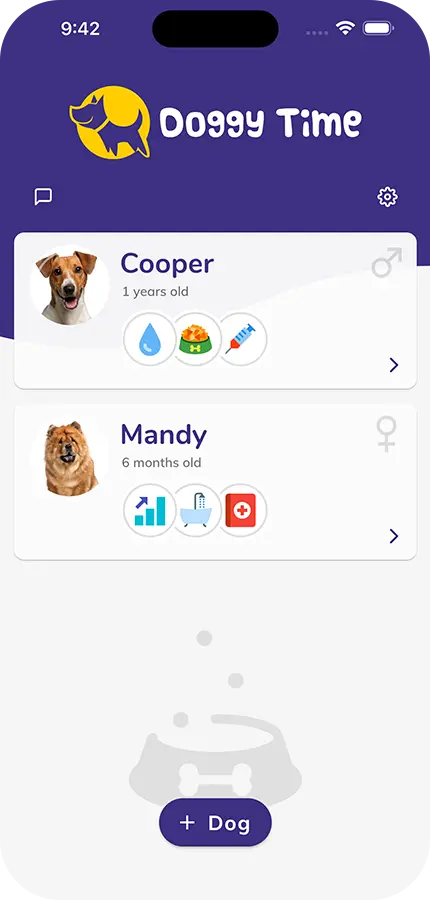
Tech Tip: Tracking your progress can make a world of difference. Consider using the Doggy Time app to log your puppy’s potty successes and accidents. You can set smart alarms for pre-guest potty breaks, collaborate with family members on training notes, and track health logs to ensure your pup stays on the path to dry greetings.