The cold morning air bites at your cheeks as you trudge through the mud, the sun barely peeking over the horizon. You slide the heavy barn door open and are immediately greeted by a rhythmic, hopeful whinny and the sound of a hoof striking a stall door. As you fumble with the light switch and inhale the earthy scent of hay and shavings, the sleepy quiet of the world fades away. You aren't just an alarm clock anymore; you are the most important part of your horse's day, and the responsibility feels as heavy—and as rewarding—as the saddle you will later lift.
Creating a consistent routine is the best way to ensure your new equine partner stays happy and healthy. Horses are creatures of habit, and they thrive on predictability. Here is a breakdown of the daily care routine every first-time owner should master.
🌅 Morning Feeding
Your horse’s digestive system is designed for constant grazing, making regular feeding times critical for preventing stomach ulcers and maintaining energy levels. A consistent breakfast routine sets the tone for the rest of the day and allows you to assess your horse’s appetite immediately.
- Measure out the exact amount of concentrated feed or grain recommended by your veterinarian.
- Top the grain with any necessary supplements, ensuring they are well-mixed to prevent sorting.
- Offer high-quality hay immediately if your horse does not have access to pasture grass.
- Observe your horse eating to ensure they are chewing normally and not dropping food.
- Adjust feed quantities gradually if you notice sudden weight gain or loss.
💧 Fresh Water
A horse can drink anywhere from 5 to 15 gallons of water a day, making hydration the single most important factor in their health. Dehydration is a leading cause of impaction colic, so checking water sources is a non-negotiable part of your morning and evening checks.
- Check water buckets or troughs for debris, algae, or frozen ice in the winter.
- Scrub the water container with a brush if you notice any slime or buildup.
- Refill the container to the top, ensuring the horse has access to water until your next visit.
- Test automatic waterers daily to confirm they are not frozen or leaking.
- Monitor water intake levels if you suspect your horse is drinking less than usual.
🏃 Turnout and Exercise
Movement is essential for a horse's mental well-being and physical health, particularly for their respiratory and circulatory systems. Getting your horse out of the stall and into the fresh air prevents "stall vices" like cribbing or weaving.
- Turn your horse out in a safe, secure pasture or paddock for several hours a day.
- Inspect the fencing for loose boards, protruding nails, or broken wires before release.
- Apply fly spray or a fly mask during the summer months to protect against biting insects.
- Check the ground conditions to ensure the footing is not too muddy or slippery.
- Bring the horse in if the weather turns severe, such as heavy thunderstorms or extreme ice.
✨ Grooming
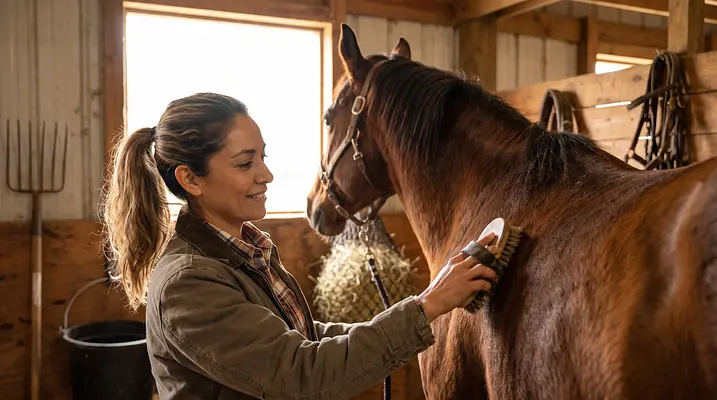
Grooming is more than just making your horse look pretty; it is a vital opportunity to bond with your animal and inspect their body for injuries. A thorough grooming session improves circulation and allows you to catch small cuts or swellings before they become major issues.
- Use a rubber curry comb in circular motions to loosen dirt and bring natural oils to the surface.
- Follow up with a stiff brush to whisk away the loosened dirt and hair.
- Pick out the hooves with a hoof pick, checking for rocks, thrush, or loose shoes.
- Run your hands over the horse's legs to feel for heat, swelling, or sensitive spots.
- Detangle the mane and tail with a brush or comb to prevent painful knots.
🩺 Daily Health Checks
You know your horse better than anyone else, and your daily observations are the first line of defense against illness. Taking five minutes to perform a quick health scan can save you hundreds of dollars in vet bills and potentially save your horse's life.
- Watch for normal manure production, looking for well-formed balls that are not too dry or wet.
- Check the eyes for discharge, cloudiness, or swelling in the surrounding tissue.
- Observe the horse’s stance, noting if they are resting a leg or shifting weight uncomfortably.
- Feel the crest of the neck and ribs to monitor body condition score over time.
- Take your horse's temperature if they seem lethargic or are not eating with their usual vigor.
Disclaimer: I am a pet care writer, not a veterinarian. This blog post provides educational information and should not replace professional veterinary advice. Always consult your veterinarian regarding your horse's specific health needs and emergency situations.
Owning a horse is a journey of a thousand small moments, from the quiet rhythm of grooming to the joy of watching them gallop across a field. While the daily checklist might seem long at first, these tasks will soon become second nature, woven into the fabric of your relationship with your horse. The effort you put into these daily routines pays you back tenfold in trust and companionship.
📝 Quick Action Plan
- Create a written schedule for feeding times and stick to it strictly.
- Purchase a high-quality thermometer and learn how to take your horse's temperature.
- Inspect your fencing and turnout area for potential hazards this afternoon.
- Establish a grooming kit and place it in an accessible location near the stall.
- Download a tracking app to log your horse’s feed, water, and health notes daily.
For those who love organization, consider using the Doggy Time app to streamline your routine. While the name suggests dogs, it is designed to help users collaborate on logging activities, training, and health items for over 30 different species, including horses. You can set smart alarms for medication or feeding times and share schedules with family members or barn managers, ensuring your equine partner never misses a beat.