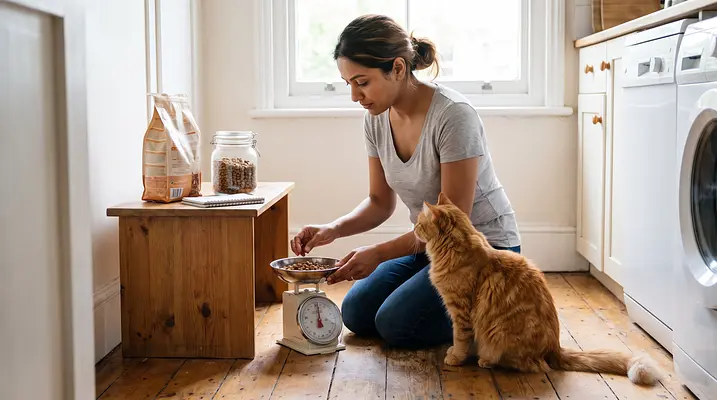
If you have ever stood in the kitchen holding a measuring cup, squinting at the back of a cat food bag, you are not alone. The feeding guidelines on commercial packaging often suggest portions that are wildly generous, sometimes recommending enough calories to sustain a small mountain lion rather than a house cat. These charts are notoriously misleading because they are based on unneutered, active animals and are often inflated by manufacturers who want you to buy more food, leading many loving owners to unintentionally overfeed their companions.
🧮 Calculating the Basics
Determining the right amount of food starts with understanding your cat’s unique metabolic needs. While a rough estimate is a good starting point, you must account for their current size and body condition to get an accurate daily calorie goal.
- Multiply your cat’s ideal weight in pounds by 20 to find a rough daily calorie estimate for a moderately active adult.
- Check for a waist tuck when viewing your cat from above to determine if their current weight is ideal.
- Consult your veterinarian to confirm your cat’s Body Condition Score (BCS) and adjust the baseline number accordingly.
- Use a digital kitchen scale to weigh food portions rather than relying on volume measurements like "cups" or "scoops."
⚖️ Portion Sizes by Weight
Once you have a baseline calorie count, you can translate that into actual food quantities based on your cat's size. Remember that these numbers are averages, and actual needs vary based on metabolism and activity level.
- Feed an average 8-pound cat approximately 150 to 180 calories per day to maintain a healthy weight.
- Increase the portion slightly for a larger 12-pound cat, aiming for roughly 200 to 240 calories daily.
- Reduce the daily intake for a smaller 5-pound cat to about 100 to 130 calories.
- Monitor weight trends weekly and adjust portions up or down by 10% if your cat starts gaining or losing pounds.
👶 Kitten Growth Needs
Kittens are essentially tiny energy-burning machines that require significantly more fuel than adults to support their rapid growth. Because they are still developing bone and muscle, their dietary restrictions are far less rigid than those of a mature cat.
- Feed kittens under six months old "ad libitum" or free-choice, allowing them to graze throughout the day.
- Provide a diet specifically formulated for growth, which contains the higher protein and fat content necessary for development.
- Switch to scheduled meals as the kitten approaches one year of age to prevent obesity from setting in.
- Expect to feed a growing kitten approximately twice the amount of food per pound of body weight compared to an adult.
🐱 The Adult Maintenance Phase
Once a cat reaches physical maturity, usually around one year of age, their metabolism slows down considerably. This is the stage where many owners accidentally let their cats become overweight by continuing "kitten portions" or free-feeding.
- Transition to a strict feeding schedule, typically twice a day, to regulate metabolism and monitor intake.
- Stick to the lower end of the calorie range if your cat is an indoor-only, sedentary lap cat.
- Measure meals precisely rather than eyeballing the bowl to avoid "portion creep" over time.
- Avoid refilling the bowl immediately after it is empty, as begging is often a behavioral habit rather than a sign of hunger.
🧓 Senior Cat Adjustments
Senior cats, typically aged seven and older, face different challenges as their digestion and activity levels change. Some seniors lose muscle mass, while others slow down so much they barely move, requiring a tailored approach to their bowl.
- Increase the protein quality in their diet to help maintain muscle mass if your senior cat becomes frail.
- Reduce calorie intake if your older cat has become sedentary and is gaining weight, as their energy needs drop by up to 20%.
- Offer softer, more palatable food options if dental issues make chewing dry kibble difficult or painful.
- Split daily portions into three or four smaller meals to aid digestion in older cats with slower metabolisms.
🥫 Wet vs. Dry Food Differences
The type of food you choose drastically changes the volume you need to serve because wet and dry foods have vastly different caloric densities. A cup of dry food packs a massive caloric punch compared to a can of wet food, which is largely water.
- Feed approximately one 3-ounce can of wet food per 3 to 3.5 pounds of body weight daily if feeding wet food exclusively.
- Measure dry food carefully, as just one cup can contain over 300 calories—enough for an entire day for some cats.
- Consider mixing wet and dry food to increase hydration while keeping costs down, but calculate the calories from each source separately.
- Prioritize wet food for male cats or cats with a history of urinary tract issues to ensure adequate water intake.
📏 Transitioning to a New Diet
Changing your cat’s food type or brand requires a gradual shift to avoid gastrointestinal upset. Sudden changes can cause diarrhea or refusal to eat, turning mealtime into a stressful event.
- Introduce the new food slowly by mixing it with the old food over a period of 7 to 10 days.
- Start with a mix of 75% old food and 25% new food for the first few days.
- Adjust the ratio gradually until you are feeding 100% of the new food by the end of the transition period.
- Watch for signs of digestive upset, such as loose stools or vomiting, and slow the transition down if these occur.
🏃 Quick Action Plan
You can start optimizing your cat’s diet today with a few simple steps.
- Locate the calorie statement on your cat food bag or can, usually listed as "kcal/kg" or "kcal/cup."
- Calculate your cat’s ideal daily calorie intake using the 20 calories per pound rule as a baseline.
- Purchase a digital kitchen scale to weigh your cat's food for absolute precision.
- Schedule a weigh-in for two weeks from now to see if your portions need adjusting.
- Replace free-feeding with set mealtimes to control exactly how much your cat consumes.
Finding the right balance for your cat’s diet is a journey, not a destination. It takes patience, observation, and a willingness to adjust as your cat ages and their needs evolve. By taking the guesswork out of the equation, you are giving your feline friend the best chance at a long, healthy, and happy life by your side.
If you find it difficult to keep track of feeding schedules, weight logs, or dietary changes, consider using the Doggy Time app. It allows you to collaborate with family members on logging pet activities, set smart alarms for meal times, and create care schedules that ensure your cat never misses a beat.
Disclaimer: This blog post is for informational purposes only and does not constitute veterinary advice. Always consult with your veterinarian before making significant changes to your pet’s diet or health regimen.