A bird’s respiratory system is a biological marvel of efficiency, designed to extract oxygen from the atmosphere with a precision that mammals can only envy. However, this evolutionary advantage becomes a fatal flaw inside the modern home, where a single overheated pan can turn a kitchen into a gas chamber in mere minutes. Because their lungs process air so completely, birds inhale toxins deeply and succumb to them long before a human nose would even detect a smell, making awareness our most critical tool in keeping them safe.
🍳 Nonstick Cookware and Fumes
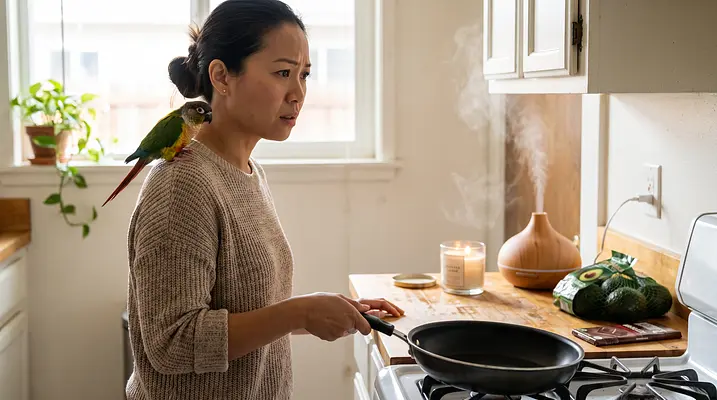
Many common kitchen appliances contain polytetrafluoroethylene (PTFE), a chemical coating that, when overheated, releases odorless fumes fatal to birds. The danger often comes as a shock to new bird owners because the cookware appears perfectly safe to human senses, but the consequences for a feathered companion can be immediate and devastating.
- Replace nonstick pans with stainless steel, cast iron, or ceramic alternatives to eliminate the risk entirely.
- Check the labels on toaster ovens, air fryers, and electric grills, as these smaller appliances often utilize nonstick coatings.
- Keep your bird’s cage in a room far from the kitchen to minimize exposure to cooking fumes of any kind.
- Turn on the stove vent and open windows immediately if you accidentally burn food or overheat a pan.
- Avoid using self-cleaning oven modes, as the extreme temperatures can release harmful residues into the air.
🌸 Scented Products and Air Fresheners
We often fill our homes with fragrances to create a welcoming atmosphere, but a bird’s delicate respiratory tract interprets these strong scents as chemical irritants. Aerosol sprays, essential oil diffusers, and scented candles can linger in the air, causing gradual damage or acute distress that requires immediate veterinary attention.
- Switch to unscented cleaning products or simple solutions like vinegar and water for safe sanitation.
- Avoid burning candles near the bird’s enclosure, especially those made from paraffin wax or containing lead wicks.
- Refrain from using plug-in air fresheners or aerosol sprays in rooms where your bird spends time.
- Research any essential oils carefully before use, as many common oils like tea tree and eucalyptus are toxic to birds.
- Move the bird to a separate room with fresh air if you need to use strong disinfectants or hairsprays.
🥑 Unsafe Foods and Plants
While sharing a snack feels like a bonding experience, the dinner table presents a minefield of foods that are perfectly nutritious for humans but deadly for parrots. Birds are naturally curious and will sample almost anything left unattended, so vigilance is required to keep forbidden items out of beak’s reach.
- Remove avocados from your bird’s environment entirely, as they contain persin, a fungicidal toxin that is fatal to birds.
- Avoid feeding chocolate, caffeine, or alcohol, which cause rapid heart rates, seizures, and often death.
- Skip the salt shaker, as birds cannot process high sodium levels which lead to excessive thirst and kidney failure.
- Research every houseplant before bringing it home, ensuring varieties like lilies, philodendrons, and poinsettias are kept far away.
- Clean fruit seeds and pits from accessible areas, as apple seeds and fruit stones contain trace amounts of cyanide.
💧 Open Water and Drowning Risks
It is easy to forget that a bird cannot swim well, and even a small amount of standing water can become a death trap for a curious pet. Birds are naturally drawn to the sparkle and movement of water, making toilets, aquariums, and cooking pots dangerous attractions that require strict safety protocols.
- Keep toilet lids closed at all times to prevent your bird from landing in the water and becoming trapped.
- Cover aquariums and fish bowls with a secure mesh or solid lid that a bird cannot dislodge.
- Supervise your bird closely whenever water is running in sinks or bathtubs during playtime.
- Empty or cover large water glasses and decorative vases that might tempt a bird to land and drink.
- Ensure swimming pools and hot tubs are covered or inaccessible when your bird is out of the cage.
🩺 Health Disclaimer
This article is intended for educational purposes and should not replace professional veterinary advice. If you suspect your bird has inhaled toxic fumes or ingested a harmful substance, contact an avian veterinarian or emergency animal hospital immediately, as birds often mask symptoms until they are critically ill.
✅ Quick Action Plan
- Walk through your kitchen and identify all nonstick cookware that needs to be replaced.
- Check the ingredient list on your cleaning supplies and switch to bird-safe alternatives.
- Move all scented candles and air fresheners to rooms where your bird does not go.
- Create a "safe foods" list on your fridge to remind family members what is okay to share.
- Install safety latches on toilet lids or make a habit of keeping bathroom doors closed.
Creating a safe haven for a flighted friend requires a shift in perspective, forcing us to look at our familiar surroundings through the lens of a small, fragile explorer. Once we identify and neutralize these hidden threats, we can relax and enjoy the companionship of our birds, knowing that the air they breathe and the environment they explore is as safe as it is loving.
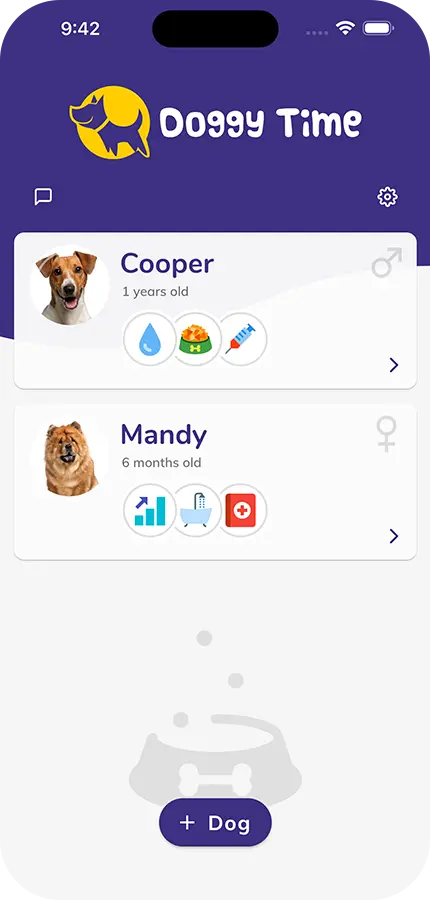
To help you stay on top of your bird’s safety routines and daily needs, consider using the Doggy Time app. While the name suggests dogs, it is designed for 30+ species including birds, allowing you to collaborate on logging activities, set smart alarms for cleaning or feeding schedules, and track training progress all in one place.