"No hoof, no horse" is one of the oldest sayings in the equestrian world, and for good reason. It doesn't matter if you have a Grand Prix jumper or a beloved backyard companion; if their feet hurt, they simply cannot perform or enjoy life. This ancient piece of wisdom reminds us that the foundation of all equine health sits right there at the bottom of four relatively small, constantly growing structures. While the anatomy of the hoof is incredibly complex, the daily routine required to keep it healthy is surprisingly straightforward and deeply rewarding.
🧹 The Daily Picking Routine
Cleaning your horse’s hooves should be as automatic as brushing your own teeth, serving as the single most effective preventative measure you can take. This daily ritual not only removes debris but gives you a hands-on opportunity to check for heat, sensitivity, and foreign objects before they become major problems.
- Pick out your horse’s feet every single day, ideally before and after every ride or turnout session.
- Use a hoof pick with a brush attachment to clear away packed mud, manure, and rocks from the sole and grooves.
- Start the motion from heel to toe, carefully scraping the collateral grooves alongside the frog to dislodge hidden debris.
- Inspect the bottom of the hoof visually for rocks, nails, or cracks that might have appeared since the last cleaning.
- Run your hand over the hoof wall and coronary band to feel for unusual heat or pulsing that indicates inflammation.
📅 Mastering the Farrier Schedule
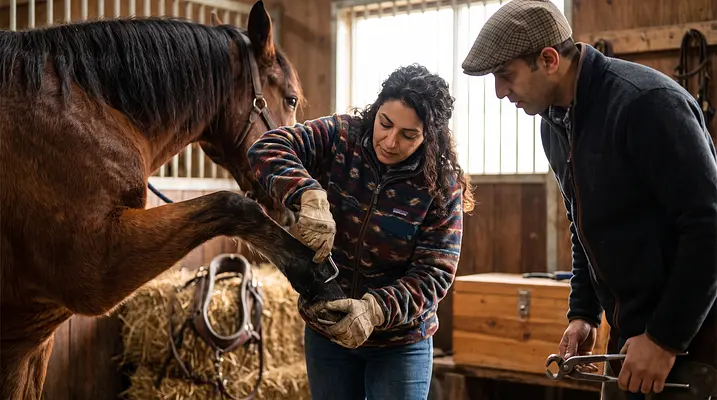
Even the cleanest environment cannot replace the need for professional trimming and shoeing, as the hoof wall grows continuously and requires precise balancing. A regular farrier schedule ensures that the hoof remains balanced, preventing unnecessary strain on tendons, ligaments, and joints.
- Schedule farrier visits every 4 to 6 weeks for shod horses, or every 6 to 8 weeks for barefoot horses.
- Confirm the specific interval with your farrier based on your horse’s growth rate, diet, and workload.
- Check the wear pattern on shoes or hooves between visits to identify if the horse is landing unevenly.
- Keep a written or digital log of appointment dates and any specific notes about the trim for future reference.
- Clean the stall and pick the hooves thoroughly before the farrier arrives to respect their time and workspace.
🦠 Spotting Thrush Early
Thrush is a bacterial infection that thrives in the deep, moist grooves of the hoof, often signaled by a distinct, unpleasant odor. Catching this condition early makes treatment simple, whereas ignoring it can lead to lameness and sensitive tissues.
- Smell the hoof for the characteristic black, tar-like odor resembling rotting garbage.
- Look for a thick, black discharge oozing from the collateral grooves around the frog.
- Touch the frog gently to see if it appears soft, ragged, or sensitive to pressure.
- Treat mild cases with a commercial thrush remedy applied daily after thoroughly cleaning and drying the hoof.
- Consult a veterinarian if the infection has penetrated deep into sensitive tissue or causes obvious pain.
🚨 Identifying Abscesses
An abscess is an infection trapped inside the hoof capsule that can cause sudden, severe lameness that often scares owners. Recognizing the signs quickly can speed up treatment and relieve your horse's pain significantly.
- Watch for a sudden onset of severe lameness where the horse is reluctant to put any weight on the foot.
- Feel the coronary band and heel bulbs for soft, swollen spots or excessive heat radiating from the hoof.
- Locate a strong digital pulse in the pastern area, which often indicates inflammation or pressure buildup.
- Look for a draining tract or burst bubble on the coronary band or heel if the abscess has ruptured on its own.
- Call your veterinarian or farrier immediately to locate the abscess and establish drainage to relieve pressure.
Caring for your horse’s hooves is less about mastering veterinary science and more about establishing a consistent, watchful routine. By picking feet daily, sticking to a professional schedule, and knowing the early warning signs of common ailments, you are actively protecting your horse's mobility and happiness. It is a quiet, daily commitment that builds trust and ensures that your equine partner stays sound for years to come.
Quick Action Plan
- Grab your hoof pick and clean out all four feet before the day is over.
- Check your calendar to confirm your next farrier appointment is booked.
- Feel the hooves for heat and check for a digital pulse to establish a baseline.
- Inspect the frog area for any black discharge or foul smells.
- Download a tracking app to log your daily checks and set reminders for farrier visits.
Disclaimer: This blog post is for educational purposes only and does not replace professional veterinary advice. Always consult your veterinarian or farrier for specific health concerns regarding your horse.
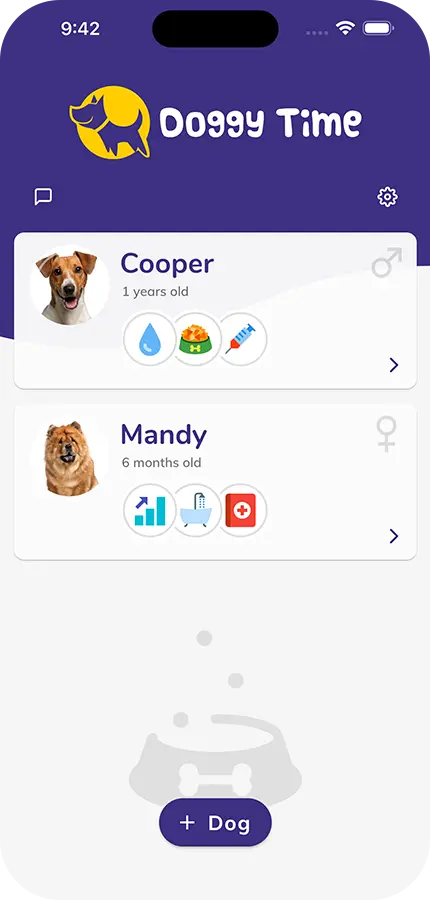
If you are looking for a better way to organize your animal care routines, consider using the Doggy Time app. While the name says dogs, this tracker and training log is perfect for horses, helping you collaborate on logging activities, set smart alarms for medication or farrier visits, and maintain consistent care schedules for all your pets.