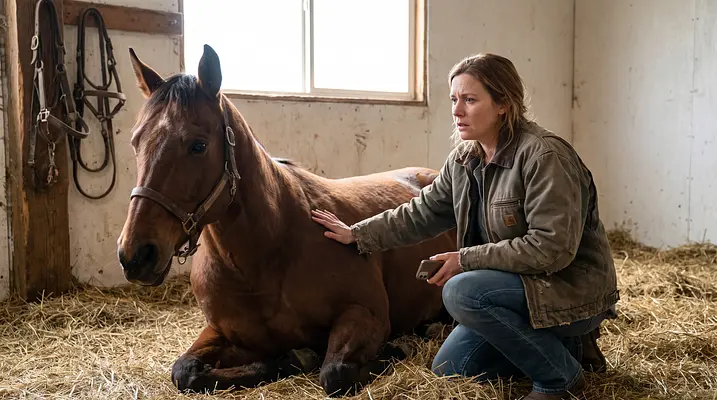
The sun has dipped below the horizon, and the barn is settling into the quiet rhythm of evening. You’ve just finished tossing the last flakes of hay, but something is wrong. Usually, your gelding is waiting at the gate, nickering impatiently and digging into his dinner with enthusiasm. Tonight, however, he barely glances at the offering. He takes a single sniff, turns away, and rests his head in the corner of the stall with a heavy sigh. That untouched pile of hay is often the first quiet alarm bell for one of the most frightening words in a horse owner’s vocabulary: colic. It isn't a specific disease, but rather a symptom of abdominal pain ranging from mild discomfort to a life-threatening emergency. Knowing how to spot the subtle signs early can make all the difference in the world for your horse's prognosis.
👀 Early Warning Signs to Watch For
Catching colic early often starts with noticing that something is "off" with your horse’s normal behavior. While some horses scream in pain, others show much subtler signs that are easy to miss if you aren't looking closely.
- Check for a lack of appetite or a sudden disinterest in food, which is often the very first red flag. 🍎
- Monitor your horse’s posture for stretching out as if trying to urinate, or standing in a "sawhorse" stance.
- Look for excessive pawing at the ground, bedding, or stall floor that goes beyond normal impatience.
- Watch for repetitive turning of the head to look at their flanks or sides. 🐴
- Listen for gut sounds; a silent abdomen or lack of gurgling noises can indicate a serious blockage.
- Observe for sweating, rapid breathing, or an elevated heart rate that doesn't match the ambient temperature or activity level.
- Note any restless behavior, such as pacing the stall or getting up and down frequently.
🚨 Immediate Steps While Waiting for the Vet
If you suspect colic, you have already called your veterinarian—this should always be your first action. While you wait for them to arrive, your goal is to keep the horse safe and prevent the situation from escalating without causing further distress.
- Remove all food, hay, and water buckets to prevent the horse from eating, which could complicate the issue. 🚫
- Walk your horse gently if they are restless, but do not exhaust them with forced exercise.
- Allow the horse to lie down quietly if they are calm, provided they are not thrashing or rolling violently.
- Keep the horse in a safe, enclosed area like a stall or small paddock where they cannot injure themselves. 🏠
- Avoid administering any pain medication unless specifically directed to do so by your veterinarian.
- Monitor vital signs, such as gum color and capillary refill time, to report to the vet upon arrival.
- Clear a path for the veterinary vehicle and gather your horse’s medical history or insurance details. 📋
🛡️ Strategies to Reduce the Risk
While not every case of colic is preventable, many are caused by management factors we can control. A consistent routine is the single best tool you have for minimizing the risk of abdominal distress in your horse.
- Make all dietary changes gradually over a period of 7 to 14 days to allow the gut microbiome to adjust. 🌾
- Provide access to clean, fresh water at all times, and consider warming water during winter to encourage drinking.
- Maximize turnout time, as movement stimulates gut motility and reduces the risk of impactions. 🌳
- Maintain a consistent feeding schedule, as abrupt changes in timing can disrupt digestive function.
- Schedule regular dental checkups to ensure your horse can chew food properly and avoid swallowing large particles. 🦷
- Use a parasite control program tailored to your region and fecal egg count results.
- Avoid feeding grain immediately before or after strenuous exercise to reduce the risk of blood flow diversion from the gut.
📝 A Quick Action Plan
- Memorize your horse’s normal resting heart rate and temperature so you recognize abnormalities instantly.
- Post your veterinarian’s emergency contact number clearly by the barn phone or in your mobile contacts. 📱
- Perform a quick visual health check twice daily during feeding times to catch subtle changes early.
- Audit your horse’s current diet and ensure you have a plan for introducing any future feed changes slowly.
- Schedule a dental float and health check if your horse hasn't had one in the last six months. 🗓️
Seeing your horse in pain is a terrifying experience, but preparation is your best defense. By acting quickly and knowing what to look for, you can provide the best possible care for your equine partner. Remember, it is always better to call the vet and be wrong than to wait and wish you hadn't.
Disclaimer: This blog post is for informational purposes only and does not constitute veterinary advice. If you suspect your horse is suffering from colic or any other medical emergency, please contact your licensed veterinarian immediately.
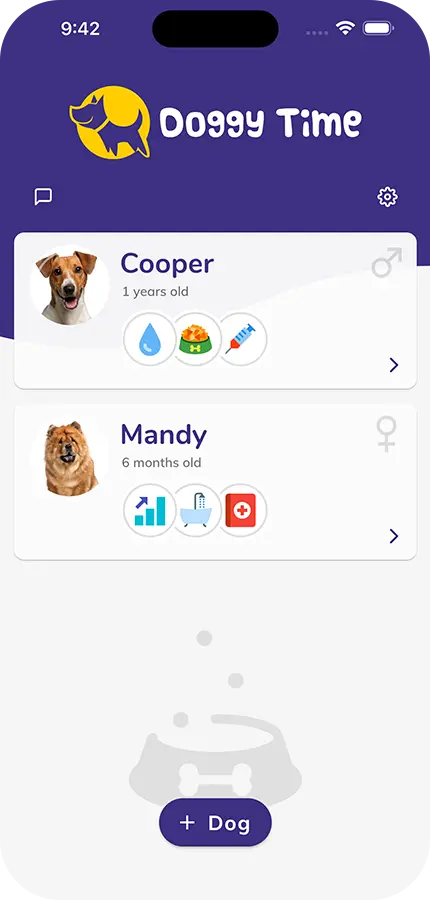
For horse owners managing complex care schedules or multiple animals, consider using the Doggy Time app to stay organized. While the name suggests dogs, this comprehensive tracker works for horses and over 30 other species, allowing you to log training activities, set smart reminders for medications, and collaborate with family members or barn staff on daily care routines.