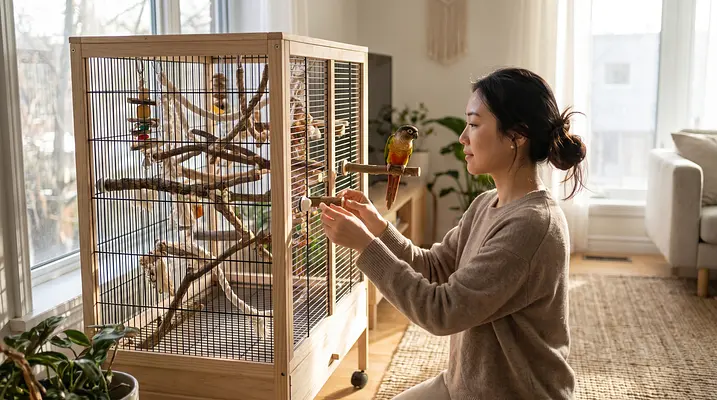
If you walk into a typical pet store and look at the packaging for bird cages, you will almost certainly see a photograph of a parakeet or cockatiel perched happily inside a glossy, colorful enclosure. The problem is that the cage in the picture is almost always far too small for the bird depicted, often offering barely enough room to spread its wings, let alone fly or play. This marketing trick sets new owners up for failure before they even bring their feathered friend home, leading to cramped birds that cannot exercise their natural instincts. To give your bird the life it deserves, you need to look past the packaging and focus on the specific elements that make a habitat truly functional.
📏 Selecting the Right Size and Bar Spacing
The size of the cage is arguably the single most important factor in your bird's physical health, serving as the foundation for the rest of your setup.
- Choose a cage that allows your bird to fully extend its wings without touching the sides or toys.
- Select a rectangular or flight-style cage rather than a tall, narrow dome or cylinder.
- Ensure the bar spacing is narrow enough that your bird cannot squeeze its head through the bars 🐦
- Opt for horizontal bars if possible, as they allow climbing birds like parrots and finches to navigate the walls easily.
- Avoid round cages entirely, as they can cause psychological stress and make it difficult for birds to orient themselves.
🌿 Creating a Variety of Perches
A common mistake new owners make is relying on the smooth, uniform wooden dowels that often come included with the cage, which can actually lead to foot sores and arthritis over time.
- Replace the standard dowels with natural branches of varying diameters to exercise your bird's feet and prevent pressure sores.
- Install at least one pedicure perch, such as a concrete or mineral perch, to help naturally wear down nails and beaks.
- Position perches at different heights and angles to encourage hopping and short flights within the cage.
- Avoid sandpaper perch covers, as these are too abrasive and can damage the delicate skin on your bird's feet.
- Ensure that high perches are not directly above food and water bowls to keep the eating area clean and sanitary.
🧸 Arranging Toys and Enrichment
A cage is more than just a place to sleep; it is an environment that needs to stimulate your bird's high intelligence and need for foraging.
- Rotate toys on a weekly or bi-weekly basis to prevent boredom and keep your bird interested in its surroundings.
- Include safe shredding materials like untreated paper or soft wood to satisfy natural destructive instincts.
- Hide treats in foraging toys to encourage mental problem-solving rather than just eating from a bowl.
- Secure toys properly so they do not pose a strangulation or entrapment risk.
- Leave enough open space in the center of the cage for your bird to flap its wings and move freely without obstruction.
🏠 Finding the Ideal Placement
Where you put the cage in your home is just as critical as what you put inside it, as birds are highly social prey animals that need to feel safe while remaining part of the family flock.
- Place the cage against at least one wall to provide a sense of security and reduce stress from feeling exposed.
- Position the enclosure at or slightly below human eye level so your bird feels like part of the flock without feeling dominated.
- Avoid placing the cage directly in front of a window, as drafts and the sight of predators outside can cause panic.
- Keep the cage away from the kitchen, as non-stick cookware fumes and smoke can be fatal to birds.
- Situate the cage in a room where the family spends time, but ensure there is a quiet corner where the bird can retreat for naps.
🧹 Maintaining a Clean Environment
A proper setup is not a "set it and forget it" project; maintaining the habitat is essential for preventing illness and ensuring longevity.
- Change the cage liner paper daily to prevent bacterial growth and make health monitoring easier.
- Wash food and water bowls with hot, soapy water every single day.
- Perform a deep clean of the entire cage, including perches and toys, on a weekly basis.
- Inspect the cage regularly for rust, loose bars, or broken toy parts that could injure your pet.
- Keep a small handheld vacuum nearby to quickly clean up scattered seeds and feathers around the cage perimeter.
Your bird relies on you for every aspect of its safety and comfort, and a well-thought-out cage makes all the difference between a bird that merely survives and one that truly thrives. Taking the time to measure correctly, choose the right accessories, and place the habitat in a social yet safe location shows your commitment to being a responsible guardian. It might seem like a lot of details to juggle at first, but once the setup is complete, you will see the payoff in your bird’s active, playful, and relaxed demeanor.
✅ Quick Action Plan
- Measure your bird’s full wingspan and compare it to your current cage dimensions.
- Purchase two new natural wood perches of different diameters to replace standard dowels.
- Check all bar spacing with a ruler to ensure it is safe for your specific species.
- Move the cage away from drafts, direct sunlight, and kitchen fumes.
- Add one new foraging toy to the cage to stimulate mental activity.
Disclaimer: This blog post provides general information for educational purposes and is not a substitute for professional veterinary advice. If you have concerns about your bird’s health or behavior, please consult a qualified avian veterinarian immediately.
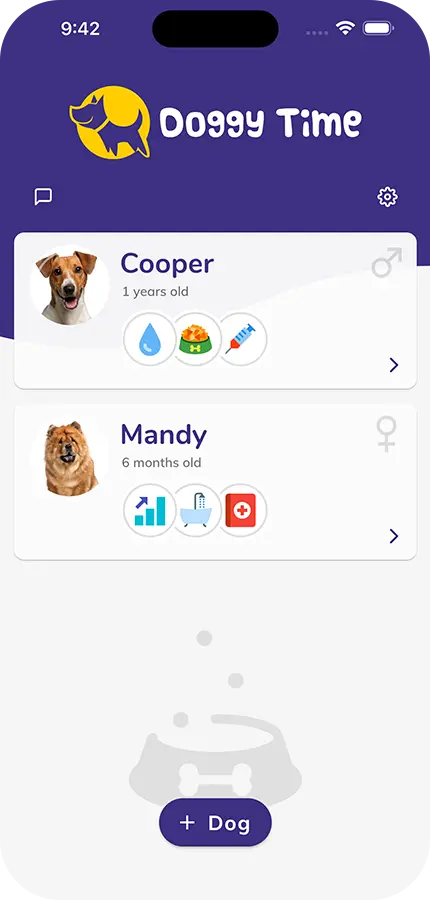
Managing a bird's daily routine, from cleaning schedules to toy rotation, can be a lot to keep track of, especially for busy families. The Doggy Time app is a fantastic tool for this, allowing users to collaborate on logging pet activities, training, and health items. With smart alarms and scheduling features, it helps you track daily habits for birds, dogs, cats, and over 30 other species, ensuring your feathered friend never misses a beat.