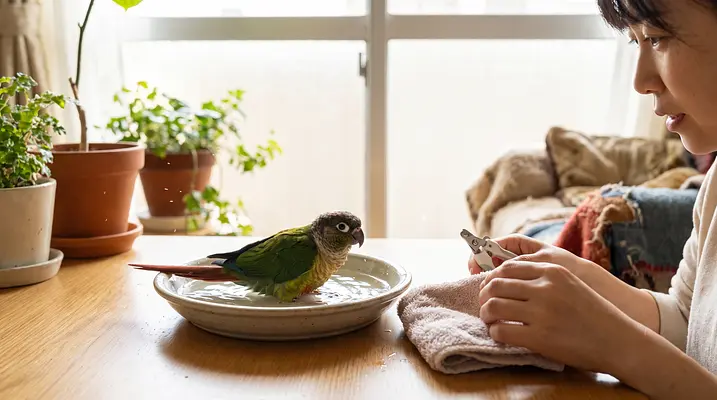
Some parrots turn into excited little acrobats at the sight of a spray bottle, hanging upside down to catch every misty droplet, while others prefer a dignified splash in a shallow ceramic dish, and a few might even try to join their owners in the shower. This wide spectrum of preferences means that bathing a bird is often a process of discovery rather than a rigid routine. Beyond the joy of bathing, maintaining nails and beaks is a crucial part of avian grooming that ensures our feathered friends stay comfortable and healthy.
🛁 Bathing Methods and Safety
Finding the right bathing method is a fun experiment that depends entirely on your bird’s personality and species preferences.
- Offer a shallow dish filled with an inch of lukewarm water for smaller birds like finches and canaries.
- Mist your bird gently with a spray bottle set to a fine mist if they enjoy the sensation of rain.
- Bring your bird into the bathroom while you shower to let them enjoy the steam and humidity.
- Install a bird-specific shower perch if your parrot loves the direct spray of running water.
- Use a sink with a slow trickle of water for birds that prefer moving water over standing water.
- Avoid using soap or shampoo unless specifically directed by a veterinarian, as plain water is usually sufficient.
📅 Bathing Frequency
Birds generally benefit from regular bathing opportunities to maintain feather health and skin hydration, though the frequency can vary by species.
- Offer bathing opportunities two to three times a week for most companion birds.
- Observe your bird’s behavior to determine if they want more or fewer baths.
- Increase bathing frequency during molting seasons to help soothe itchy skin and loosen feather sheaths.
- Provide daily baths during hot summer months to help your bird stay cool.
- Maintain a consistent schedule to encourage reluctant bathers to get used to the routine.
💅 Nail Care and Trimming
Overgrown nails can make perching difficult and lead to painful scratches for the owner, so regular maintenance is essential.
- Check your bird's nails monthly to see if they are curling around the perch or getting caught on fabrics.
- Provide a variety of natural wood perches with varying diameters to help naturally wear down nails.
- Use concrete or grooming perches sparingly and place them lower in the cage to prevent foot sores.
- Trim only the sharp tip of the nail using bird-specific clippers if you are comfortable doing so.
- Keep a styptic powder nearby to stop bleeding immediately if you accidentally cut the quick.
- Ask a professional groomer or veterinarian to perform the trim if you are nervous about handling the clippers.
🐦 Beak Maintenance
A healthy beak is vital for eating, climbing, and playing, and most birds keep it in shape naturally with the right tools.
- Inspect your bird’s beak regularly for flaking, overgrowth, or asymmetry.
- Provide plenty of safe wooden toys and chew blocks to encourage natural wearing down of the beak.
- Offer nuts in the shell or crunchy vegetables to give the beak a healthy workout.
- Avoid using sandpaper perch covers, as these can cause painful abrasions on the beak and feet.
- Never attempt to trim the beak yourself, as this requires specialized training and tools.
🩺 When to See an Avian Vet
While routine grooming can often be done at home, certain signs indicate a medical issue that requires professional attention.
- Schedule an appointment if you notice the beak growing rapidly or crossing over itself.
- Visit the vet immediately if a nail is bleeding profusely and won't stop after several minutes.
- Consult a professional if your bird’s nails are curling sideways or causing the bird to limp.
- Seek help if the beak appears crusty, has unusual lesions, or changes color drastically.
- Monitor for signs of foot problems like bumblefoot, which can be exacerbated by poor perch choices.
Disclaimer
This article is for informational purposes only and does not constitute veterinary advice. Always consult with a certified avian veterinarian regarding the health and specific grooming needs of your pet bird.
Caring for a bird’s grooming needs is about more than just aesthetics; it is a fundamental part of ensuring their quality of life. By paying attention to their bathing preferences and keeping a watchful eye on their nails and beak, we can catch potential health issues early. With patience and gentle handling, these grooming sessions can become another opportunity to bond with our feathered companions.
✅ Quick Action Plan
- Introduce a shallow water dish or misting session to your bird this week to gauge their preference.
- Inspect your bird’s nails today to see if they are curling or overly sharp.
- Add a new natural wood perch or chew toy to the cage to support nail and beak health.
- Purchase styptic powder for your first aid kit in case of any minor grooming accidents.
- Schedule a check-up with an avian vet if you notice any beak abnormalities or difficulty perching.
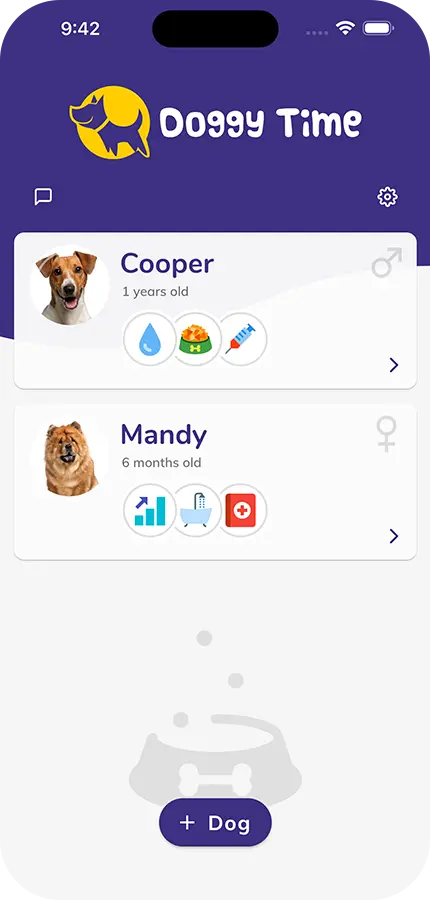
Keeping track of grooming schedules and health observations can be a challenge, especially in busy households. The Doggy Time app is a fantastic tool for this, allowing users to collaborate on logging pet activities, setting smart alarms for bath days, and tracking training milestones. It works for birds, dogs, cats, and over 30 other species, making it easier to manage your pet's daily habits and care routines.